
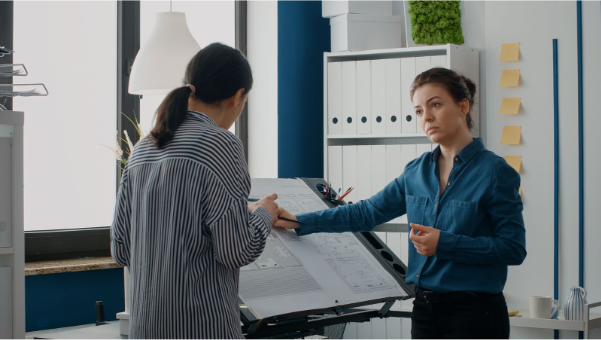

Creating a productive and efficient work environment goes beyond choosing furniture and paint colours. It is necessary to comprehend how various work styles function in the same place in order to design an office effectively. After all, employees in today’s diversified workplaces perform different duties, from intensely collaborative sessions to concentrated individual work. A skilled office interior designer considers these varying needs to ensure the space supports all working preferences and functions.
Understanding Work Styles and Their Impact on Office Layout
Modern offices must cater to four primary work styles: focus work, collaboration, social interaction, and learning. Focused work demands quiet, uninterrupted environments where concentration is prioritised. This environment can be achieved through the use of private booths, enclosed offices, or acoustically treated zones. This setup prevents distraction and enhances output for employees engaged in routine individual tasks or those needing high concentration levels.
Collaborative workspaces, in contrast, require openness and accessibility. These areas benefit from large shared desks, breakout spaces, and meeting rooms equipped with technology to support in-person and virtual collaboration. A professional interior designer will balance open layouts with acoustic zoning to ensure collaboration doesn’t interfere with concentration zones.
Social spaces and informal interaction zones are also key in office environments, especially in industries where idea-sharing and team culture are vital. These areas, such as lounges, kitchens, or casual seating arrangements, promote unplanned communication and foster a sense of community. They should be strategically placed to encourage use without disrupting productivity-focused zones.
Office Design Strategies to Support Diverse Work Modes
Flexibility is a critical design element to effectively support multiple work styles. Modular furniture, movable partitions, and multi-functional areas allow for the quick reconfiguration of the workspace based on changing team dynamics or project needs. This agile office design enables businesses to adapt without major renovations, keeping the workplace aligned with operational goals.
Zoning is another critical strategy. A well-zoned office will have clearly defined areas for quiet work, collaboration, and socialising. Clear visual or physical boundaries – such as changes in flooring, ceiling design, or lighting – help signal the purpose of each zone. This approach minimises disruption and maximises functionality across the office.
Moreover, it’s necessary to consider individual preferences within the overall work style framework. Some employees thrive in busy, open environments, while others perform best in quiet, enclosed spaces. A balanced design incorporates options for both – including quiet pods, sit-stand desks, and shared work benches – giving staff autonomy over where and how they work.
Role of an Office Interior Designer in Tailoring Spaces
An experienced interior designer is integral in aligning workplace layout with business needs and employee behaviours. Through workplace assessments and staff interviews, they identify the dominant work styles in the organisation. This data-driven approach ensures that the design isn’t just aesthetically pleasing but functionally supportive.
The designer also brings knowledge of ergonomics, lighting design, acoustic treatment, and space utilisation to deliver a well-rounded environment. For instance, they might recommend adjustable lighting in focus areas or collaborative furniture in brainstorming rooms. The result is a workplace that empowers employees, enhances efficiency, and supports business growth.
Conclusion
Designing office spaces to suit different work styles is no longer optional – it’s essential to building a productive, future-ready workplace. A successful office design allows for concentration, teamwork, and social contact in a logical and adaptable arrangement. Engaging a professional interior designer guarantees that the area represents the company’s visual identity as well as the functional requirements of its employees. Businesses can build settings beneficial to all parties involved by means of strategic implementation and careful planning.
Contact OSCA to start building a space that works smarter.
